AI-Enhanced License Plate Recognition for Smarter Parking Enforcement
Tizora built an AI license plate recognition layer for ParkSmart's mobile parking enforcement app in North America. It checks each image, applies the right fix for snow, mud, glare or blur, and scores confidence before permit validation. Officers saw fewer repeated scans and faster permit answers, with no new steps in their app.
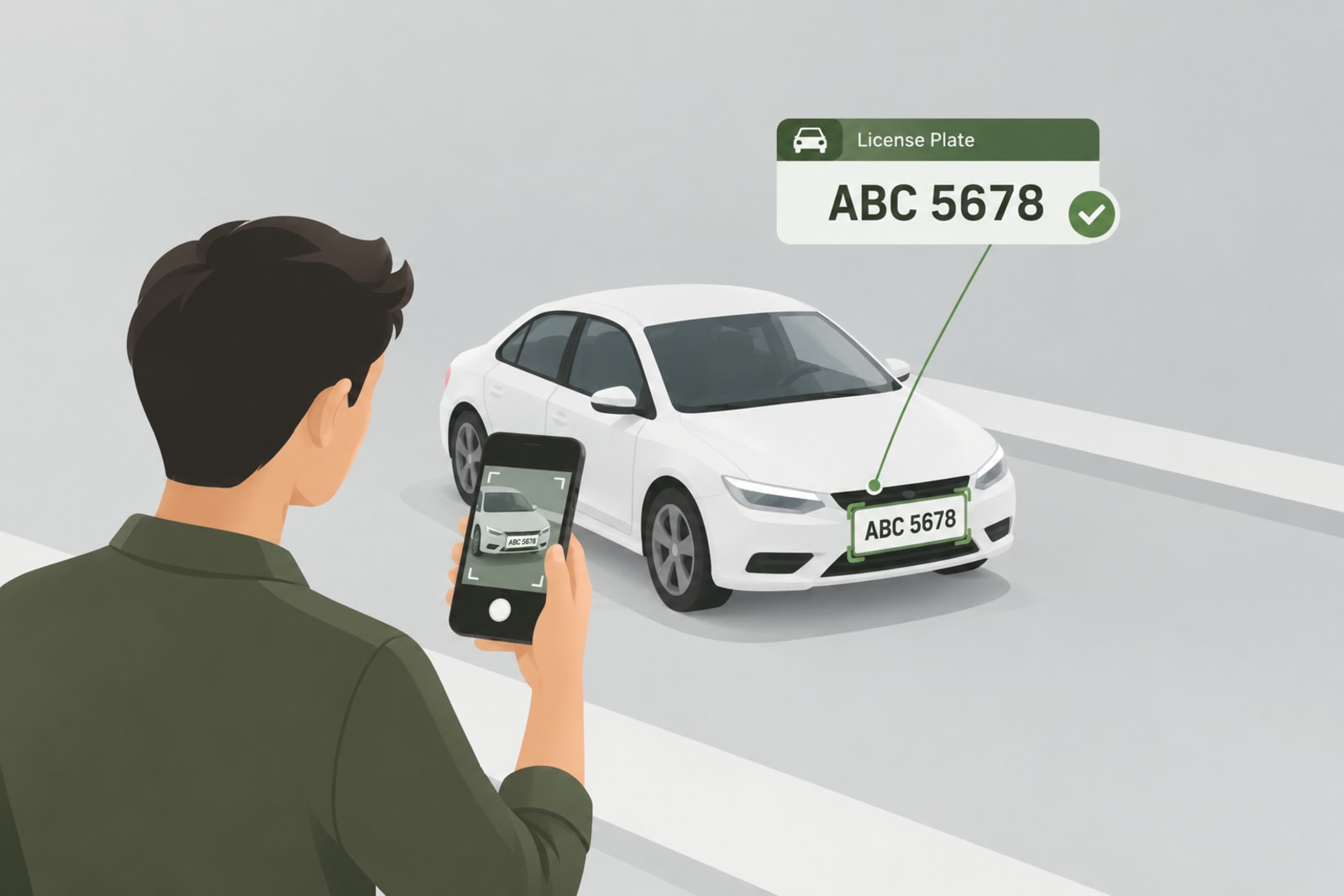
What changed once the AI layer was live
What was stopping plate scans from working at the curb?
Snow, mud, glare, damaged plates and motion blur made plates unreadable. Officers had to rescan or verify by hand, and every failed scan slowed the patrol.
Recognition treated every image the same, with no quality check and no clear path for an uncertain read, which risked wrong enforcement decisions.
- Officers had to keep their existing mobile enforcement app, with no added steps
- The LPR recognition engine already in use had to stay in place
- Processing had to fit the latency budget of a mobile enforcement workflow
- An uncertain read could never turn into a wrong enforcement decision

How does the AI LPR pipeline work?
Tizora built a seven-step pipeline from scan to enforcement decision. Steps 2, 3 and 5 are the new AI layer; the rest use the officer's app, the existing LPR engine and the permit database. You can try the plate recognition step in our live demo.
An AI layer that makes every scan smarter
It sits between the officer's camera and the existing LPR engine. It judges each image, improves it the way that image needs, then checks how sure the result is.
The design is layered, so AI is added without disturbing the systems already in production: the officer's mobile enforcement app, an API layer built by Tizora, the AI image processing layer, the existing LPR recognition engine and the permit database. The same confidence-first design runs through our AI skin analysis feature, and the image quality checks work much like document capture in our digital KYC platform. The wrap-don't-replace layering is also how our aircraft turnaround management software sits on top of existing airport systems.
Strong reads go straight through, weak ones retry, and unclear ones go to manual review instead of a guess.
What the product does
Dependable reads, fewer rescans and fast permit answers, with no new steps for officers.
How does the system fit together?
A layered design that adds AI without disturbing the systems already in production.
Mobile enforcement app
Where the officer captures the plate and reads the result. It stays the officer's existing app, with no added steps.
- Officer's existing app
iOS
Android
Losing scans to snow, glare or blur? See how an AI layer can fit your existing enforcement app and LPR engine.
Outcome: fewer rescans and faster permit answers
Qualitative outcomes, before and after. The comparison below describes the enforcement workflow before and after the AI layer went live in production.
| Metric | Before | to | After | Change |
|---|---|---|---|---|
| Repeated scans on difficult plates | Scan after scan | Usable read far more often on the first try | −35% | |
| Time to a permit answer | Slowed by rescans and manual checks | Permit answers arrive sooner | −30% | |
| Unreadable or uncertain plates | Manual checks by the officer | Automatic retry, fallback or escalation to review | No guessed reads | |
| Snow, mud, glare and blur | Plates often unreadable | Handled in production | Reliable in real conditions | |
| Officer workflow | Existing mobile app | Same familiar app | No new steps |
How we measured
- Before and after descriptions come from the client's enforcement workflow before and after the AI layer went live.
- Indicative figures based on project estimates; to be replaced with measured client data.
AI delivers the most value when it solves real operational problems — not when it is added simply because it is AI. In this project, we applied computer vision to an existing production workflow where accuracy and reliability directly affect day-to-day enforcement operations.
Lessons
What we learned
Assess every image before fixing it
Picking the fix per image, rather than one filter for all, made the whole LPR pipeline more resilient.
Treat uncertain reads as a risk
Confidence thresholds, retries, fallbacks and manual review stop an unsure read from becoming a wrong enforcement decision.
Set the latency budget first
Agreeing speed and fallback rules before any code shipped kept the AI layer fast enough for officers in the field.
Will this work for your parking operation?
Who it fits, what it connects to and typical scope.
- Built for
- mobile permit enforcement where snow, mud, glare, blur and poor lighting make plates hard to read
- Integrates with
- your existing enforcement app, LPR recognition engine and permit database, through an API layer
- Typical scope
- image quality assessment, adaptive enhancement, confidence handling and permit validation (try the LPR demo)
This approach fits parking operators and enforcement teams that already scan plates on a mobile app and lose time to plates that cannot be read.

License plate recognition FAQs
Frequently asked questions
AI-assisted image processing evaluates each captured image for quality issues — such as snow, mud, glare or motion blur — and applies the appropriate enhancement technique (denoising, contrast correction, deblurring) before recognition is attempted. This contextual approach improves read accuracy in conditions that cause conventional LPR systems to fail.
LPR (license plate recognition) and ALPR (automatic license plate recognition) refer to the same core technology. Usage varies by region and industry, but both describe software that captures, reads and matches vehicle license plates against a database in real time.
Each recognition result is evaluated against a confidence threshold. High-confidence reads proceed directly to permit validation; low-confidence reads trigger a retry, an alternate processing pipeline, or escalation to manual review — preventing incorrect enforcement decisions from uncertain reads.
Yes. The AI processing layer sits ahead of the existing LPR recognition engine and mobile workflow, so enforcement officers continue using their current application without added steps.
Specialized processing pipelines handle the most common causes of LPR failure — snow, mud, glare, motion blur and poor lighting — by enhancing the specific visual information needed for recognition, rather than applying a single generic filter to every image.
Disclosure
Results reflect this client's data and will vary. Some figures are indicative estimates pending measured client data.
More case studies
A fragile scan step became a dependable one.
An AI layer, invisible to officers, turned difficult real-world images into confident enforcement decisions.
